

Nearly three years into the generative AI revolution, we’ve reached a critical inflection point. According to new research from the World Economic Forum and Accenture, despite near-universal acknowledgment that responsible AI matters:
Less than 1% of organizations have fully operationalized responsible AI.
That’s not a typo. While 81% of companies remain in the earliest two stages of AI governance maturity, the gap between knowing why responsible AI matters and knowing how to implement it continues to widen. This maturity level across all sectors reveals a vulnerability that threatens investment confidence, regulatory readiness, and public trust.
The Numbers That Should Keep Executives Up at Night
81% of 1,500 surveyed companies remain in early-stage responsible AI implementation
Only 19% have systematically implemented responsible AI measures (up from 14% in 2024)
0% (rounded) have achieved Stage 4 maturity with systemic, anticipatory approaches
53% of the US population has used generative AI, but only 1% demonstrate basic AI literacy
59% of workers have substantial concerns about AI’s impact on job security, but only 29% of executives think workers are concerned
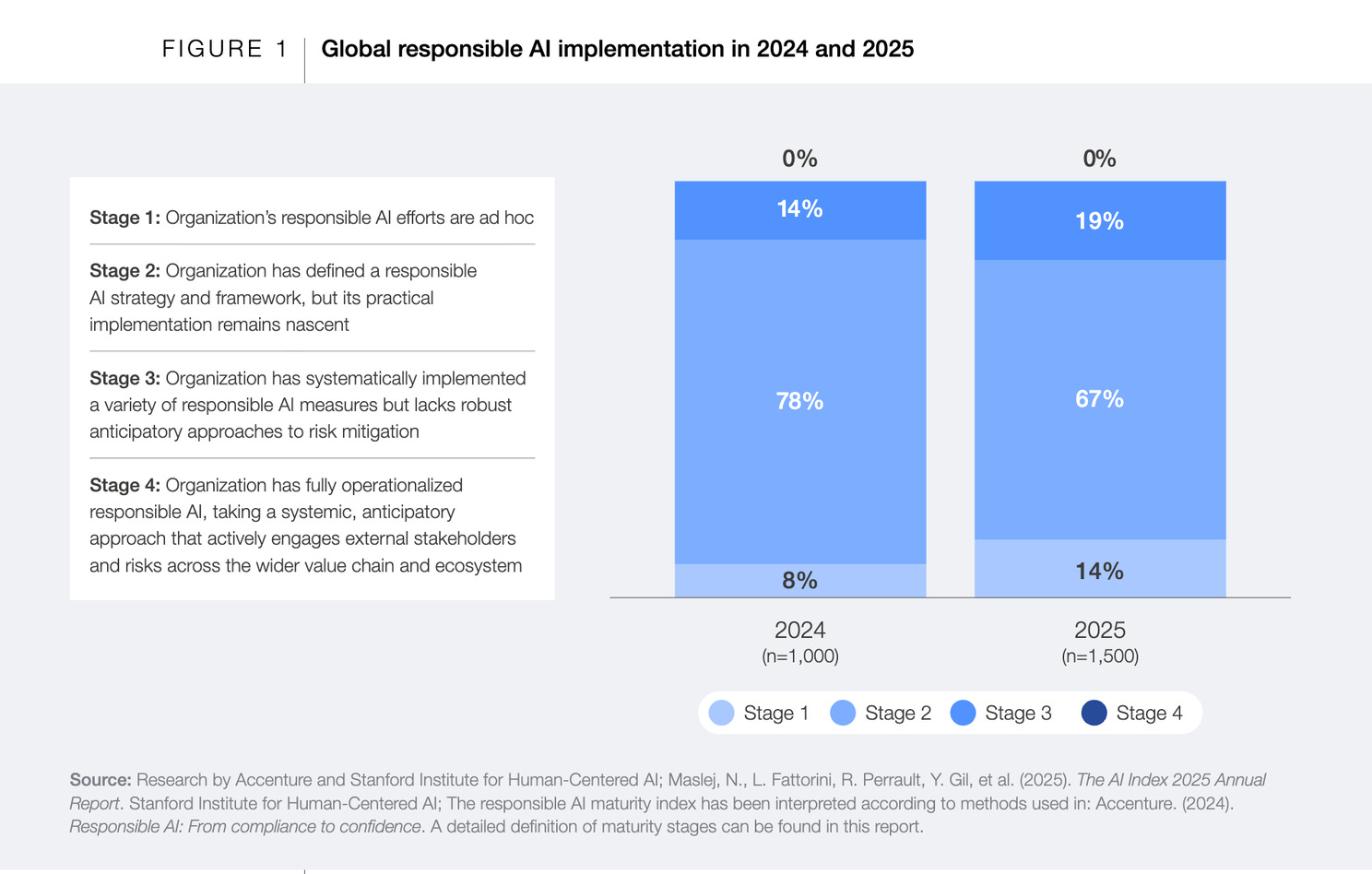
Cross-Sector Responsible AI Implementations
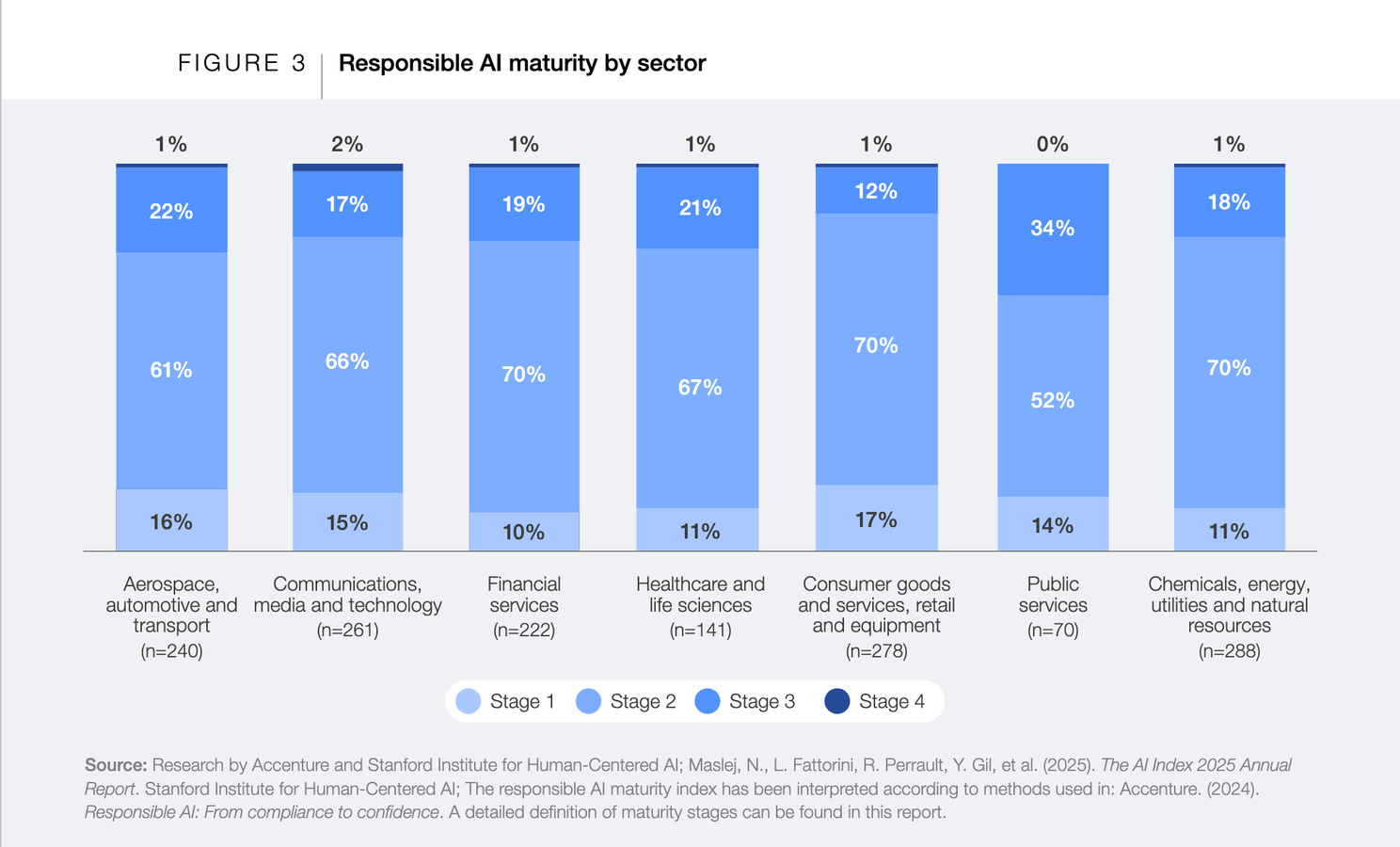
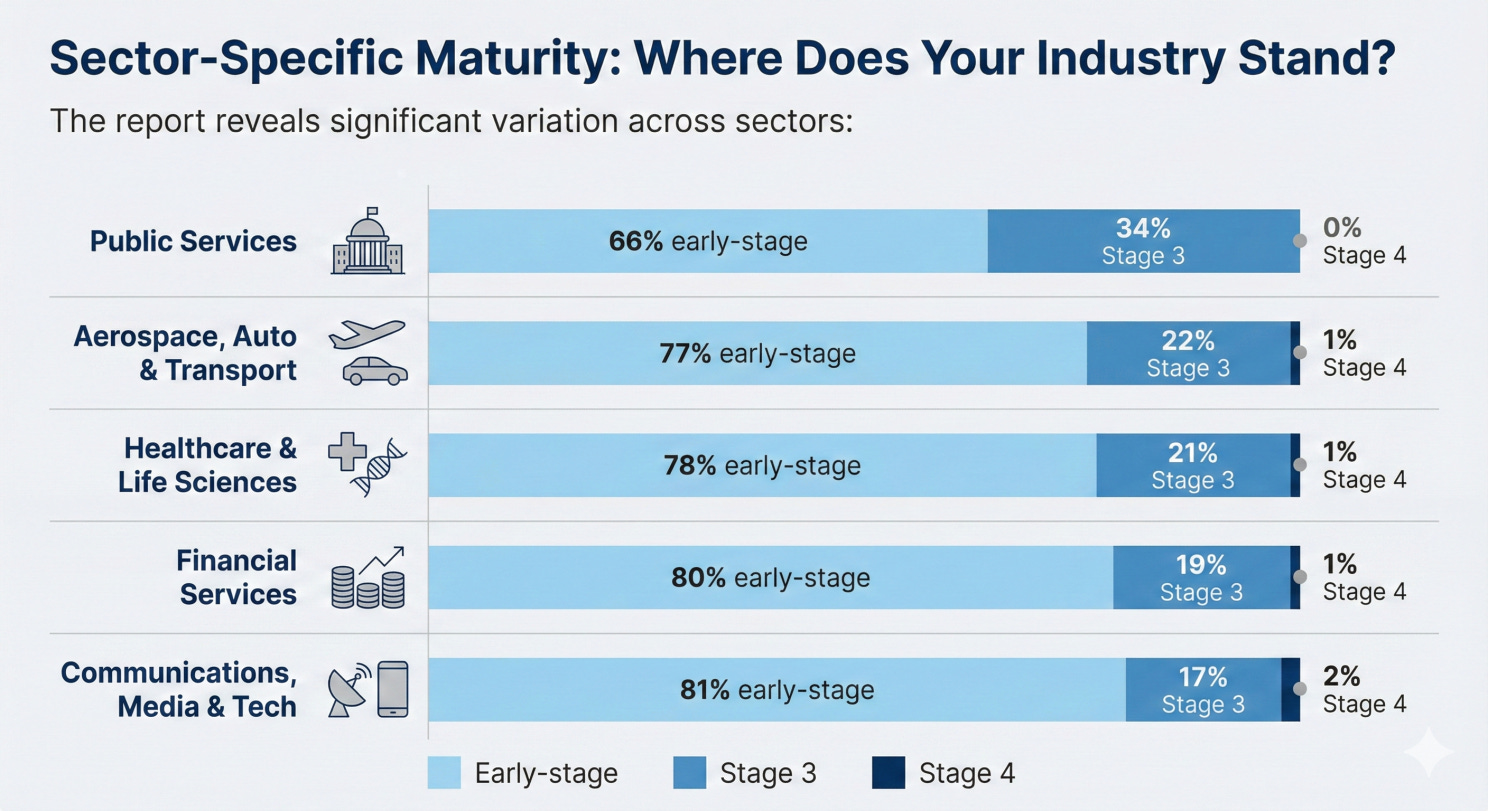
Vertical-Specific Responsible AI Maturity
Actionable Takeaways for Executive Leaders
The World Economic Forum’s playbook includes a framework that leading organizations use to build competitive advantage through responsible AI implementation
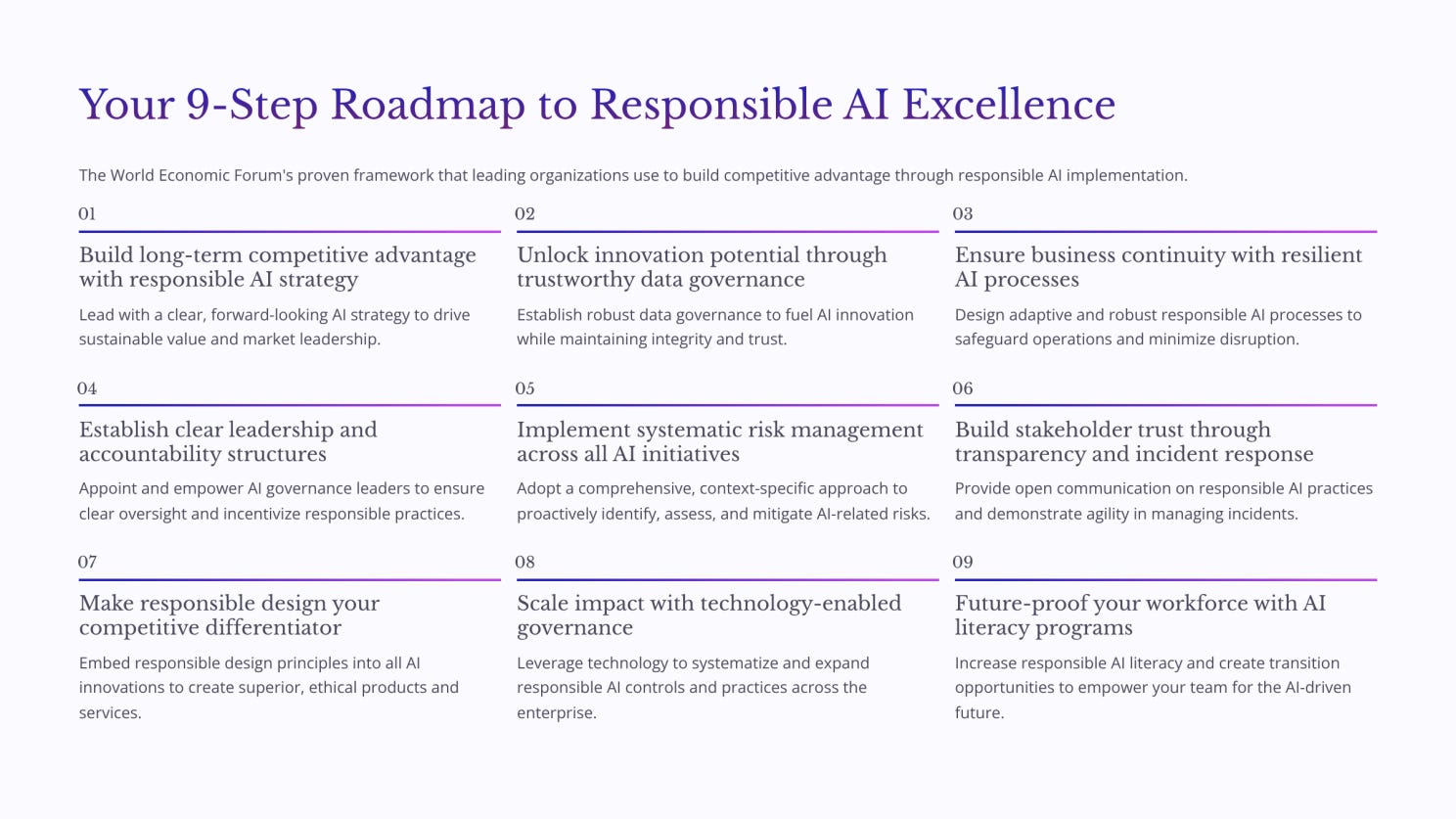
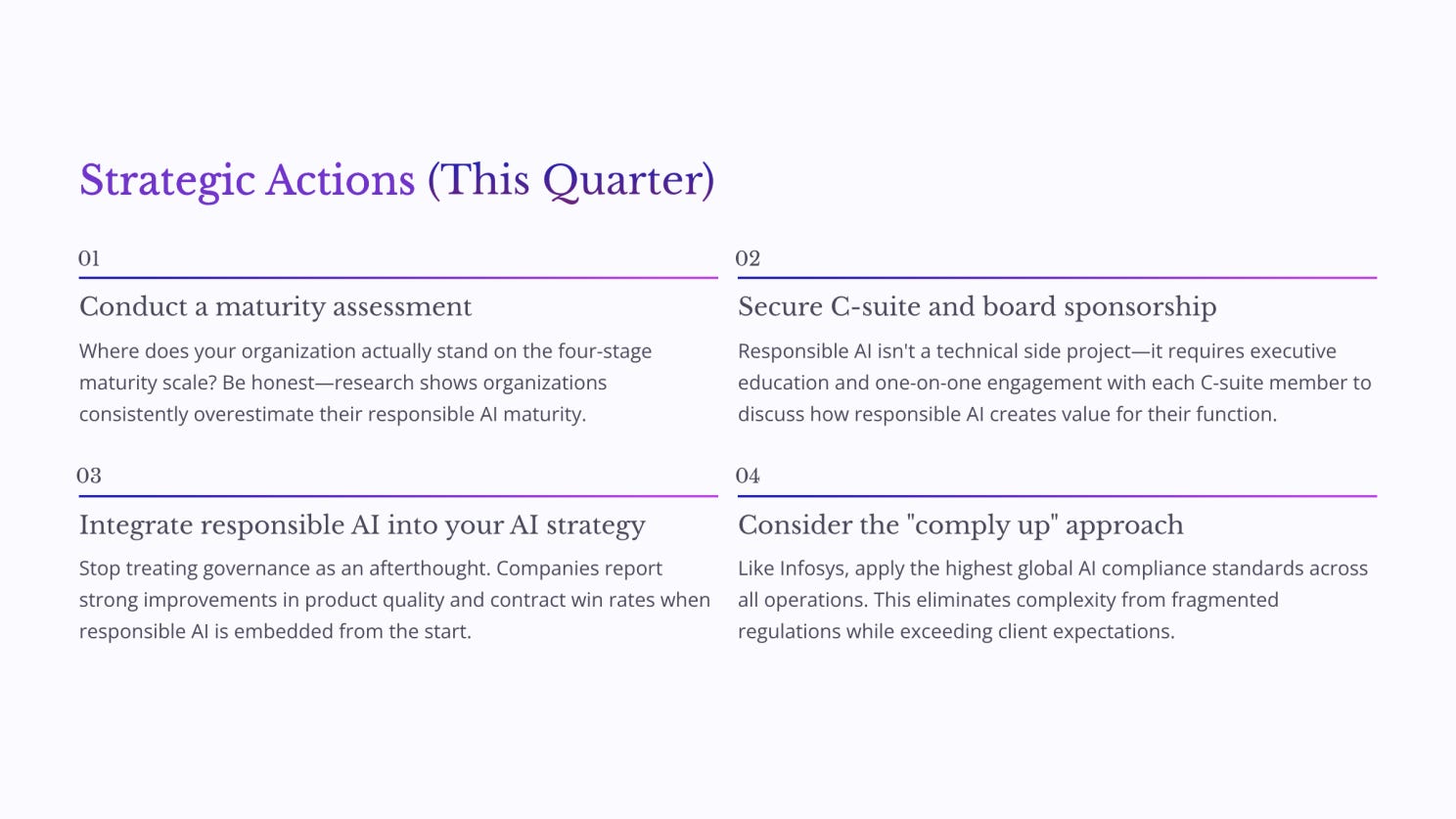
Key Actions in Q1 2026
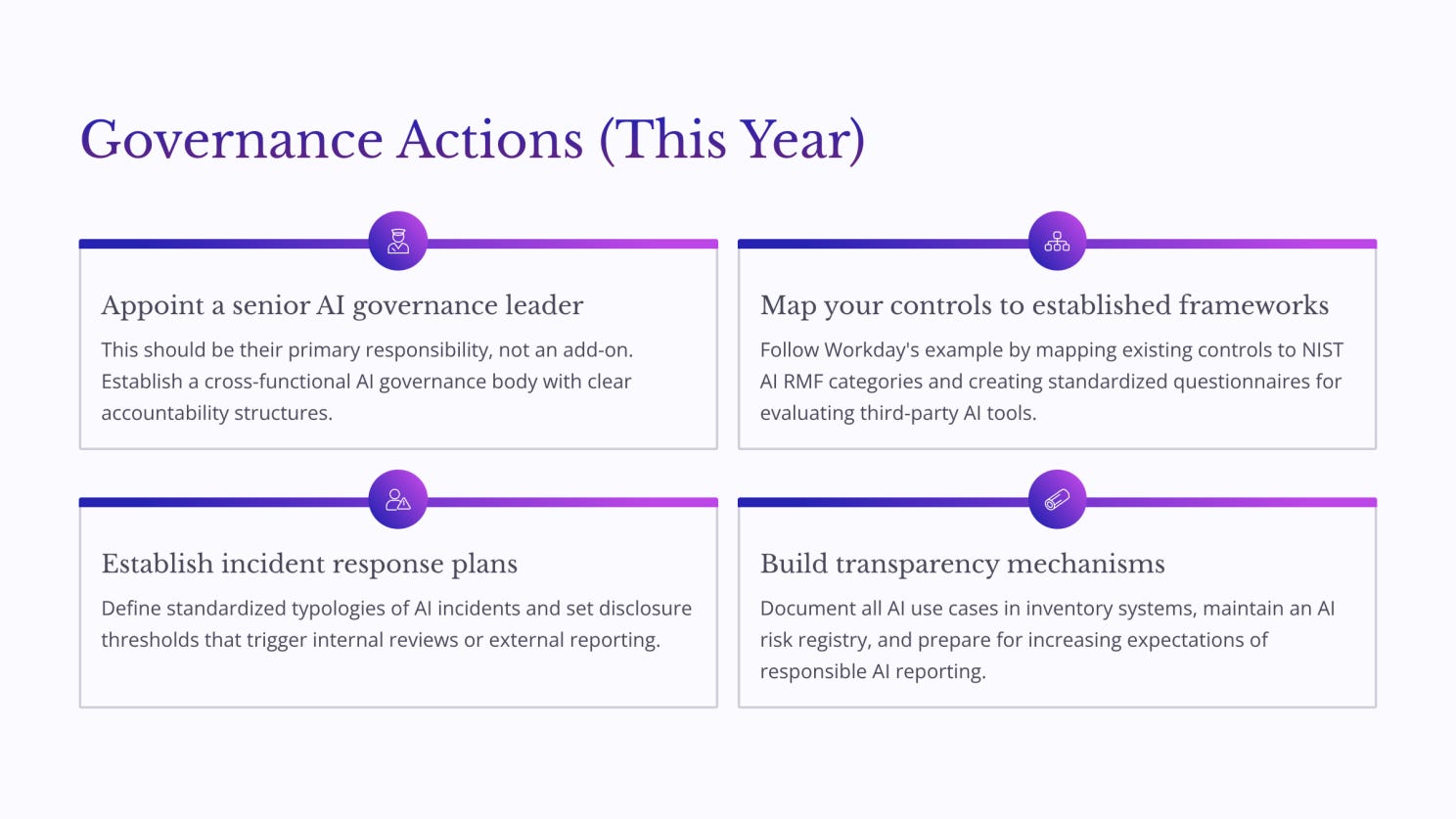
2026 Responsible AI Priorities
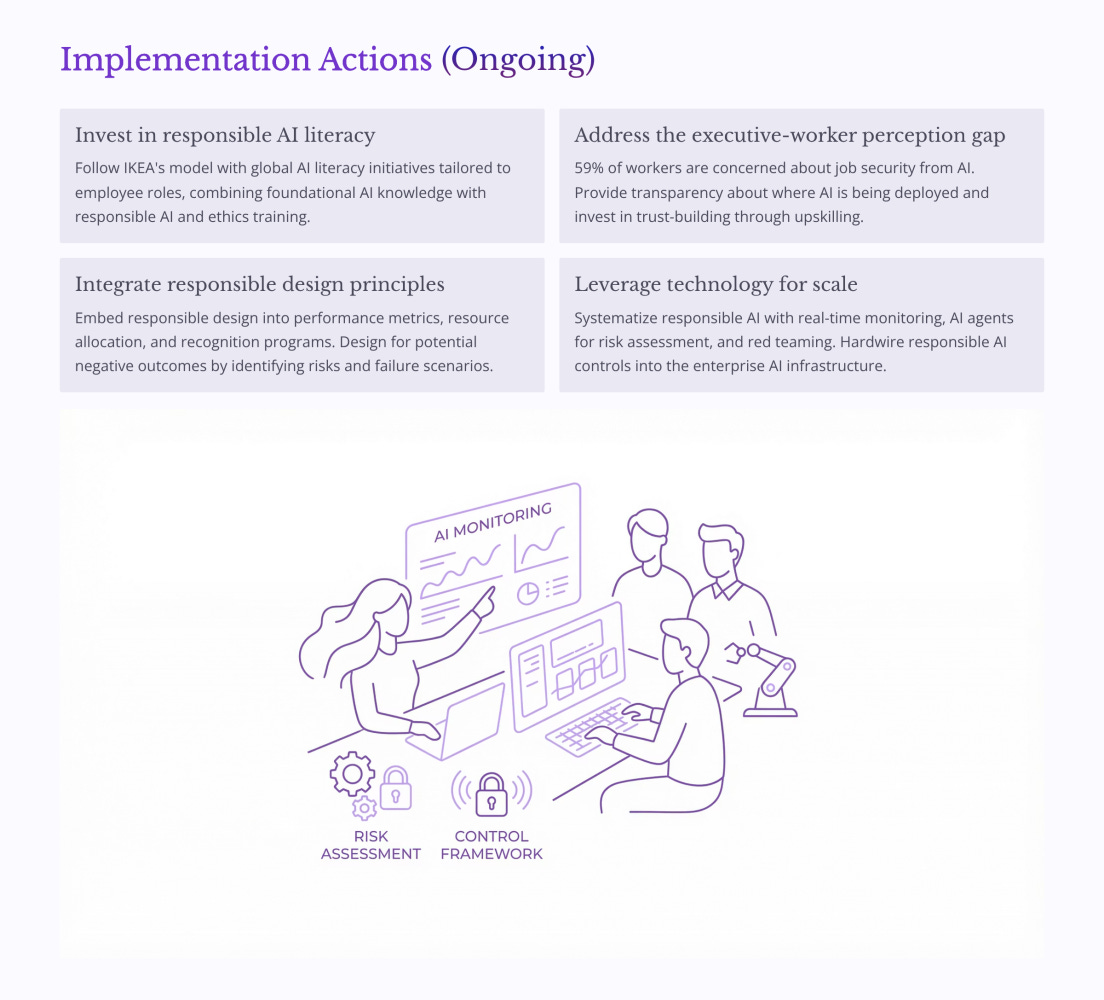
Responsible AI is iterative
Companies Overestimate Their Responsible AI Maturity
Here’s the contrarian view: the fact that less than 1% of organizations have achieved Stage 4 maturity represents an enormous opportunity for differentiation. Organizations that move deliberately and strategically toward comprehensive responsible AI implementation will stand out to customers, partners, regulators, and talent.
The playbook’s case studies, from Telefónica’s multi-pronged governance approach to IKEA’s responsible AI literacy program to Workday’s NIST AI RMF implementation, show that this isn’t theoretical. Real organizations are building scalable, effective, responsible AI programs.
But it is not easy.
Special Considerations for Healthcare Organizations
For those of us working in healthcare AI governance, this report underscores several critical points. With 78% of healthcare and life sciences organizations at an early stage of maturity, the industry faces unique pressures due to HIPAA requirements, patient safety considerations, and the high-stakes nature of clinical decision support.
The playbook emphasizes that sector-specific frameworks are essential. The Monetary Authority of Singapore’s AI Model Risk Management guidance for financial services provides a template for developing healthcare-specific guidance. Organizations should consider participating in community-based working groups interpreting frameworks like NIST AI RMF for healthcare contexts.
The Real Cost of Inaction
This gap in responsible AI implementation has real business implications. The report documents that responsible AI practices drive improved efficiency, enhanced customer trust, and significant improvements in product quality and contract win rates.
As regulatory requirements multiply globally (the EU AI Act, South Korea’s AI Framework Act, Japan’s AI Promotion Act), organizations without mature responsible AI practices face increasing compliance costs and competitive disadvantages.
Moreover, as agentic AI systems become more prevalent, comprehensive governance becomes even more critical. The foundations you build today for responsible AI will determine your ability to deploy more autonomous systems tomorrow confidently.
Three Questions to Ask Your Team This Week
Where do we honestly stand on the four-stage responsible AI maturity scale?
Who owns responsible AI at the senior leadership level, and is it their primary responsibility?
What would it take to move one stage forward in the next 12 months?
References
World Economic Forum. (2025, September 22). Advancing responsible AI innovation: A playbook. https://reports.weforum.org/docs/WEF_Advancing_Responsible_AI_Innovation_A_Playbook_2025.pdf